


Water as a Factor in War & Sovereignty
Yesterday, the United States struck a desalination plant in Iran — a facility that turns saltwater into drinkable water for civilians. A rule governing the "civility" of war (especially during stages of escalation) is to not directly target civilian infrastructure, and that rule has been broken.

From Urban America to Iran
Flint, Michigan — 2014. The state of Michigan switched the city's water supply to the Flint River to cut costs, knowing for at least a year that the pipes were corroded and the water was toxic. Black babies, children, and adults developed neurological damage, suffered skin lesions, hair loss, and organ failure.
This wasn't negligence — it was policy
"Politics is war without bloodshed." Mao Zedong
Some of Baltimore's oldest Black neighborhoods have been quietly water-poisoned for decades. The same city that hosts world-class institutions like Johns Hopkins cannot deliver clean water to the Black ZIP codes and constituents surrounding it.
No bombs were dropped 💣 No strikes were called in 💥
But the outcome is identical
Black civilian populations are denied safe water by a government that deems their lives expendable.
Preparation
Now situated in an escalating conflict, Black people of like minds must continue to forge a national identity and prepare against the potential fallout. Here are immediate steps you can take:
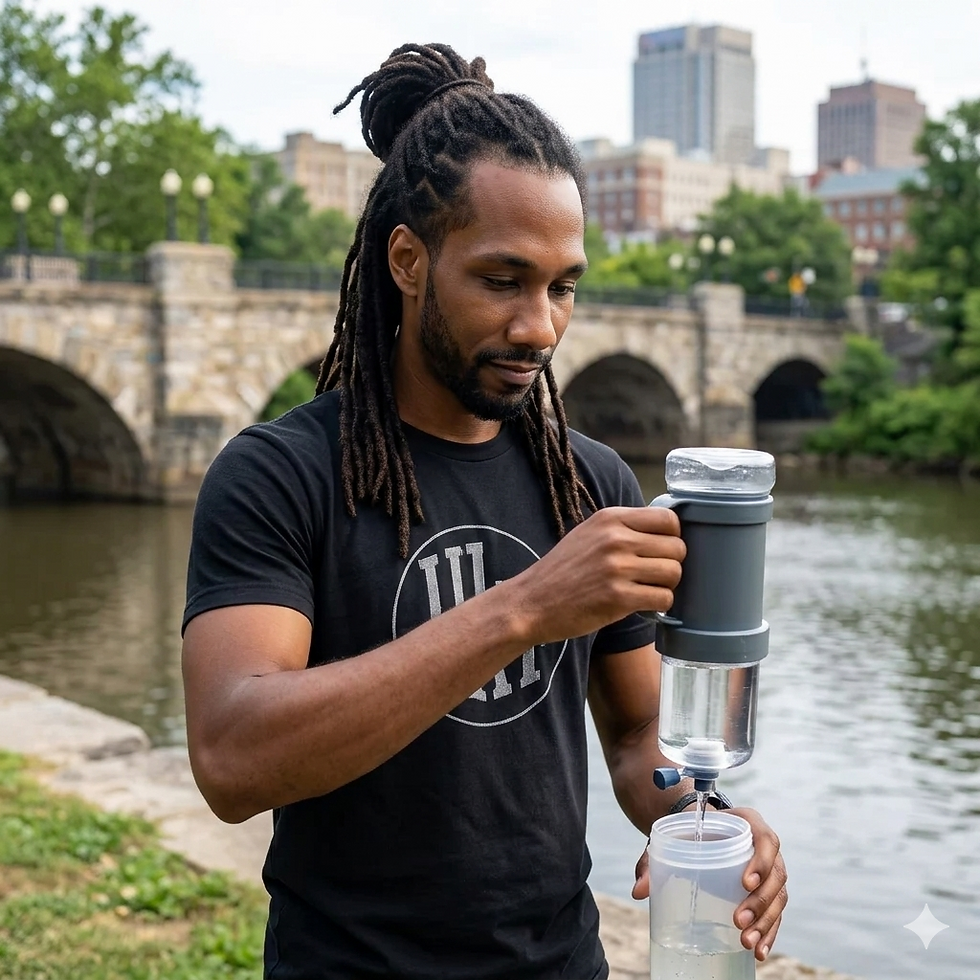
Buy water storage containers and portable water filtration systems (like Sawyer or LifeStraw) — approximately $20
Buy home water carbon-filtration systems for baths, showers, or sinks — approximately $30–$40
Keep at least a 3-month supply of spring water stored at home
Keep filtration tools like LifeStraw in your emergency kit (and create an emergency kit if you don't have one)
Install bath and shower filters to reduce exposure to skin-absorbed metals and chlorine
May the ancestors continue to bless and guide PLM.
Subscribe 🔔 to learn more and stay connected.
Comments